
Body odour
Explore how an ingredient strategy could be evaluated alongside a finished-product odour assessment. Avoid treating an antimicrobial result as a complete deodorant study.
Research questions around skin microorganisms, body odour and the interaction between a product and its environment.
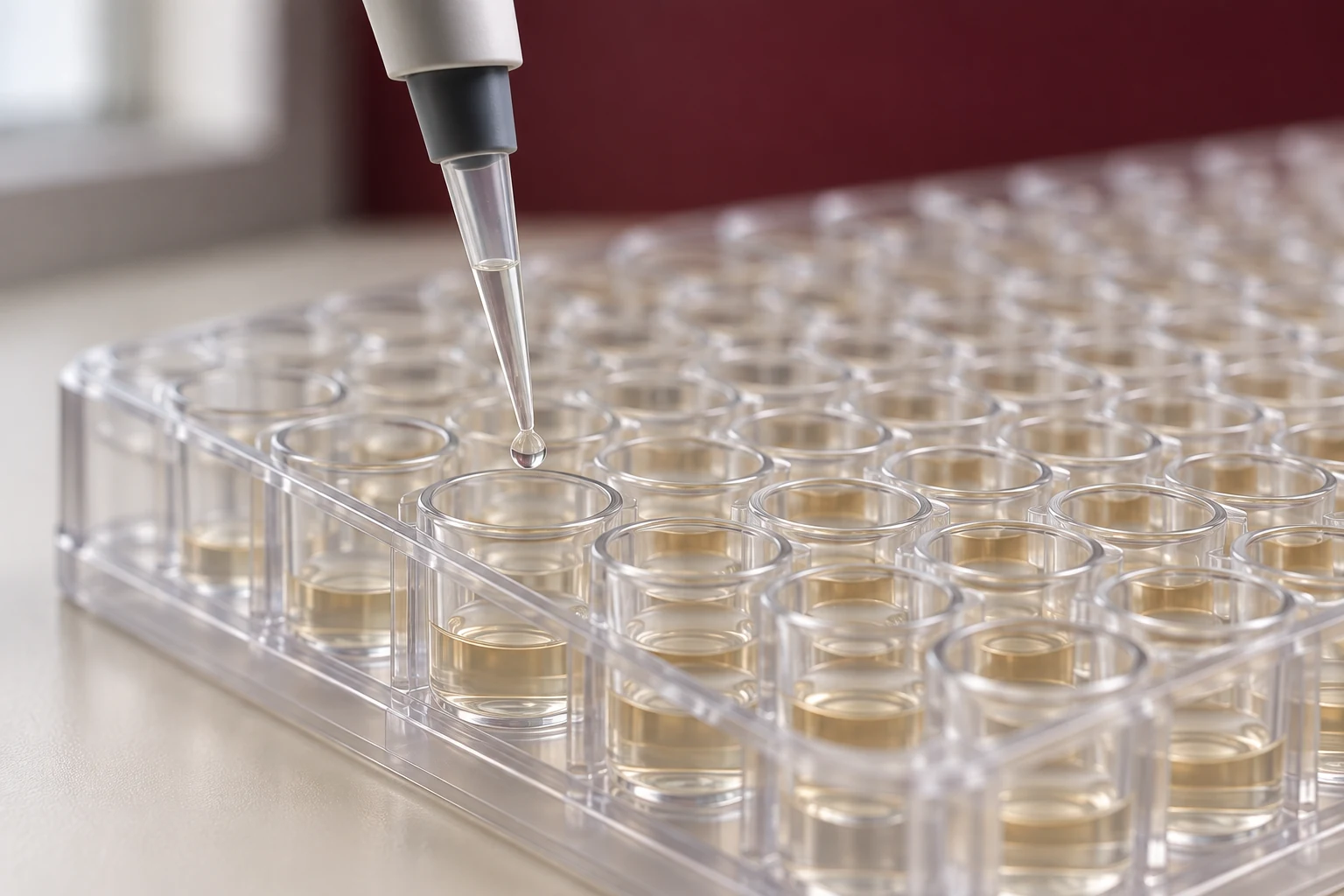
In short. Skin-microbiome research in cosmetics studies how microorganisms on a specific body site relate to a cosmetic outcome such as body odour. A credible claim names the body site, the microbial function that matters and the measurement, and tests the whole formula rather than one ingredient.
A microbiome story needs more than a list of organisms. We would begin by defining the body site, the intended outcome and the type of change being investigated. Published research provides context, but it cannot establish that an Anadoris formula changes the microbiome in a beneficial way.
Explore how an ingredient strategy could be evaluated alongside a finished-product odour assessment. Avoid treating an antimicrobial result as a complete deodorant study.
Consider cleansing, pH, preservation, fragrance and use conditions together. One highlighted ingredient cannot describe the entire formula.
Discuss composition and function with specialist partners. Select methods around the question rather than around the most marketable technology.
Define exactly what terms such as microbiome-friendly would mean in a proposed study. Avoid unsupported claims about restoring a perfect balance.
| Focus | Proposed approach | Interpretation |
|---|---|---|
| Research population | Body site, routine and inclusion criteria | Results from one body site may not transfer to another. |
| Microbial assessment | Partner-designed sampling and analysis | Sampling and analysis choices affect interpretation. |
| Consumer benefit | A separately defined cosmetic endpoint | A microbial change alone does not prove a benefit. |
| Product integrity | Preservation and compatibility review | Microbiome positioning cannot replace product safety work. |
Study design, safety review, partner capability and feasibility must be agreed before work begins. Methods below are proposed, not a list of installed equipment or available services.
This page sets out a research direction. No named Anadoris candidate, clinical result or proprietary active is being announced.
Potential project outputs, subject to agreement:
External sources provide scientific or industry context. They are not Anadoris studies or endorsements, and no partnership is implied. Sources checked 16 November 2026.
It is the community of bacteria, fungi and other microorganisms living on the skin. Its make-up differs between oily, moist and dry body sites, such as the face, underarm and forearm.
Fresh sweat has little smell. Bacteria on the skin, especially in the underarm, break down compounds in sweat into volatile molecules that we perceive as odour.
A defined body site, a stated outcome, an appropriate measurement and a test of the finished product. A list of organisms or a single ingredient study is not enough on its own.