
Fermentation-derived materials
Request the precise ingredient identity and technical dossier. The production organism, process and final material should not be treated as interchangeable.
Evaluating materials made through biological processes for their identity, quality, performance and formulation fit.
In short. Biotech-derived cosmetic ingredients are made with biological processes such as fermentation or enzymes instead of extraction from plants or animals, or classical chemistry. The route can improve consistency and sourcing, but identity, purity, performance in the formula, documentation and cost still decide whether an ingredient is worth using.
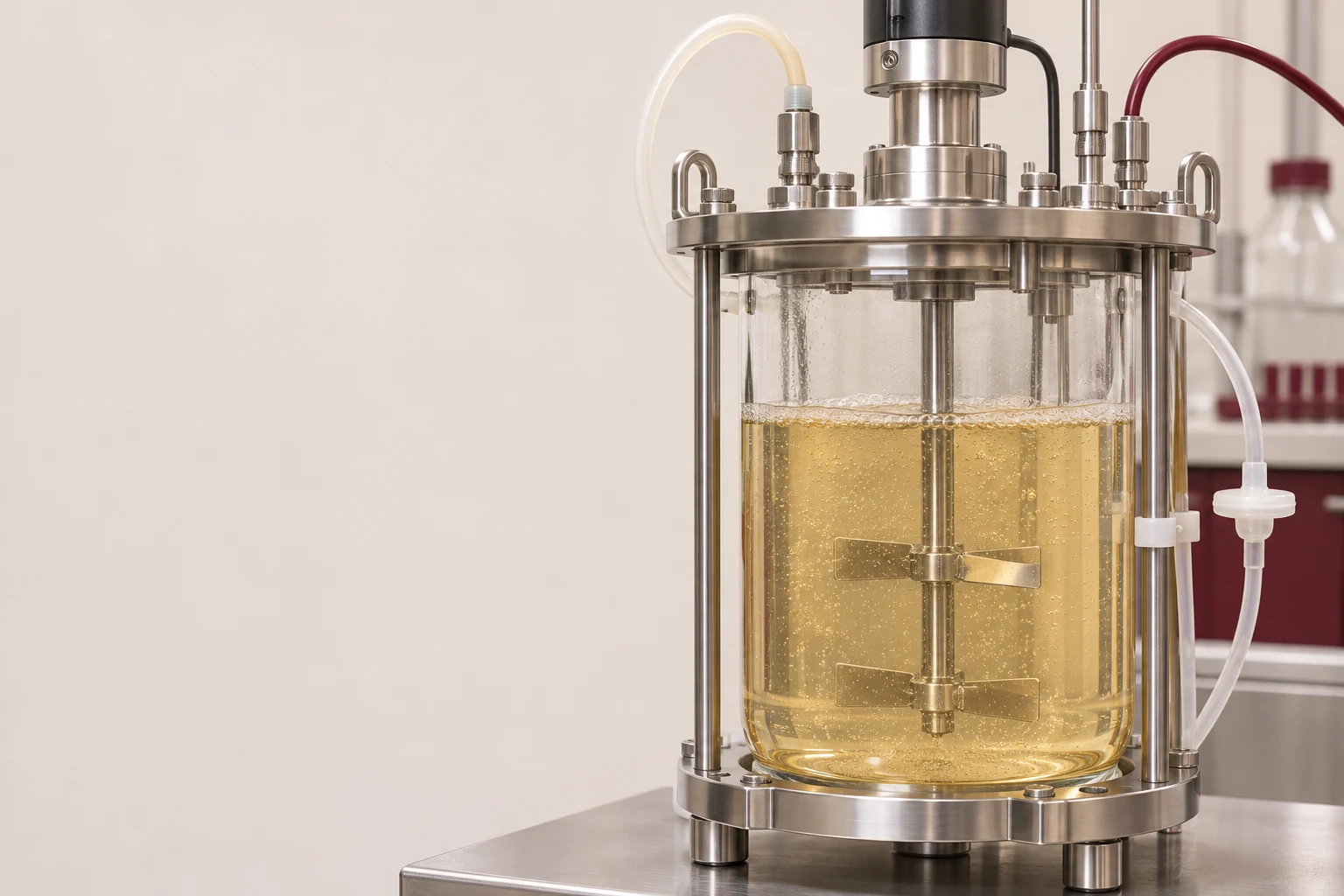
A production route is the beginning of evaluation. Ingredient identity, consistency, sensory impact, documentation, supply and cost still decide whether it belongs in a formula. Our proposed route is to work with qualified ingredient and technology partners; the conceptual bioreactor shown here is not evidence of an Anadoris fermentation facility.
Request the precise ingredient identity and technical dossier. The production organism, process and final material should not be treated as interchangeable.
Review the material actually supplied, the evidence supporting it and its compatibility with the target format. A broad category name is not a specification.
Discuss specifications, analytical methods and batch documentation with suppliers before prototype work.
Ask for a defined comparison and supporting data before describing a route as lower impact. Biological origin alone is not a sustainability result.
| Focus | Proposed approach | Interpretation |
|---|---|---|
| Identity | INCI, composition and material specification | Confirm that the study material matches the supplied ingredient. |
| Performance | Methods, comparator and use conditions | Supplier evidence does not automatically support the finished product. |
| Formulation | Solubility, pH guidance and stability information | Check behaviour in the complete product and pack. |
| Commercial fit | Availability, MOQ, lead time and cost-in-use | Assess a plausible supply route before scaling a concept. |
Study design, safety review, partner capability and feasibility must be agreed before work begins. Methods below are proposed, not a list of installed equipment or available services.
This page sets out a research direction. No named Anadoris candidate, clinical result or proprietary active is being announced.
Potential project outputs, subject to agreement:
External sources provide scientific or industry context. They are not Anadoris studies or endorsements, and no partnership is implied. Sources checked 16 November 2026.
Ingredients produced by microorganisms or enzymes, for example through fermentation. Familiar examples include hyaluronic acid, which is commonly made by bacterial fermentation, and squalane made from fermented sugar.
Not automatically. A biological route can offer consistent quality and avoid harvesting scarce materials, but each ingredient must still be assessed for identity, purity, safety, performance and supply.
Identity and specification, consistency between batches, performance in the intended formula, the safety and regulatory dossier, environmental evidence for the route, and whether supply and cost are practical.