
Wear and dry-down
Design comparative wear assessments with consistent application and agreed time points. Record both intensity and character.
Scent character, wear, delivery and sensory experience across fragrance-led body care.
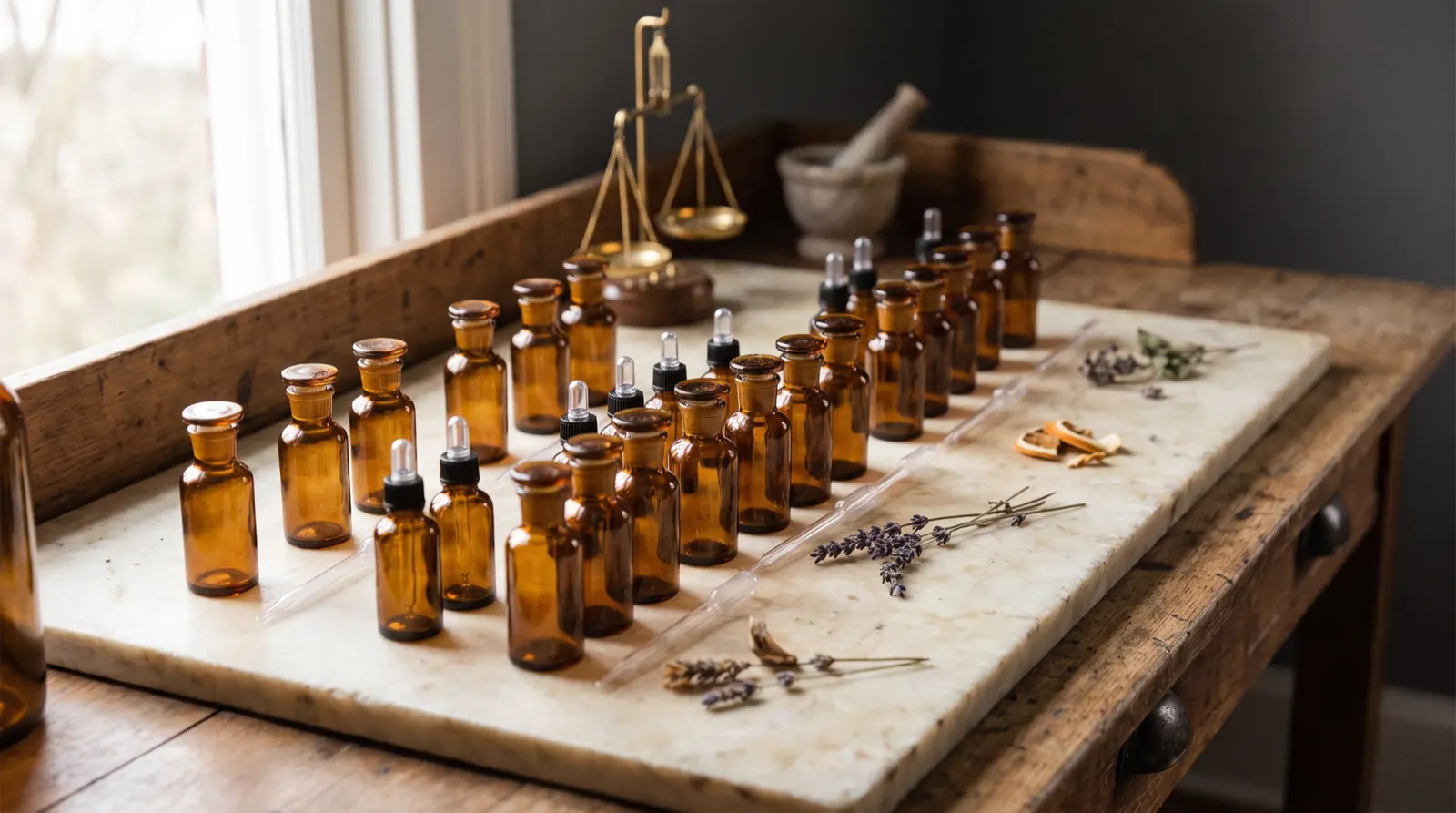
In short. Fragrance research studies how a scent smells first, how it changes as it dries down and how long it lasts on skin in a given product. Analytical measurements, trained sensory panels and consumer preference answer different questions and should not be used as interchangeable proof.
Fragrance research connects material selection with a lived experience: the first impression, the dry-down and the way a scent is perceived in use. Our proposed work separates analytical observations, trained sensory assessments and consumer preferences. None of these should be presented as interchangeable proof.
Design comparative wear assessments with consistent application and agreed time points. Record both intensity and character.
Evaluate scent in the actual wash, lotion, oil or mist. A fragrance on a blotter is a reference, not the final product experience.
Use clear questions about liking, familiarity and perceived mood. A pleasant experience does not establish a treatment for sleep or anxiety.
Review emerging biologically produced fragrance materials for identity, odour profile, documentation and supply feasibility.
| Focus | Proposed approach | Interpretation |
|---|---|---|
| Scent character | A defined sensory vocabulary and reference | Preference and intensity are different outcomes. |
| Wear | Consistent application and timed assessment | Results depend on the tested formula and conditions. |
| Product stability | Fragrance in the final base and packaging | Check colour, odour and physical changes together. |
| Wellbeing language | Appropriate consumer-perception questions | Do not convert preference findings into medical claims. |
Study design, safety review, partner capability and feasibility must be agreed before work begins. Methods below are proposed, not a list of installed equipment or available services.
This page sets out a research direction. No named Anadoris candidate, clinical result or proprietary active is being announced.
Potential project outputs, subject to agreement:
External sources provide scientific or industry context. They are not Anadoris studies or endorsements, and no partnership is implied. Sources checked 16 November 2026.
Skin temperature, moisture, oiliness and the product base all change how quickly fragrance materials evaporate, so the same scent can open and dry down differently from person to person.
Trained panels can rate scent intensity on skin or blotters at set times, and analytical methods such as headspace analysis can track which materials remain. Consumer tests show how long people notice it in use.
Only with evidence suited to that claim. Liking a scent is a preference, not proof of a wellbeing effect; such claims need careful study design and cautious wording.